Three things I learned from this program is how to be a better leader (and what kind of leader I best represent/have become as I moved through this program) building meaningful partnerships, and new trends and issues when it comes to working with young children and families. As early childhood professional it is important to build positive, meaningful relationships with young children and their families. As professionals, we must be able to collaborate with young children and families to ensure the success for all young children. It often takes a lot of CoP’s to effectively address these issues. I had never heard the term CoP before and didn’t realize that I am actually a part of several of them right now in my educational journey and personal life. I also learned that feedback from your instructor and classmates can help you to look at things from a different point and view, and this will allow for better results. In observing the trends, issues, and challenges over the past two years helped me to understand that in my future work with young children that I will have to possibly address some of these same issues. This past course really helped me sit down and focus on my passions and my educational journey past this Masters Degree.
My long-term goal is that I truly hope that I take the next steps I outlined in my CAPSTONE project and advocate for the things that I am passionate about in early childhood. I have already started looking into finding programs in the Philadelphia area where I can volunteer in to help make play a reality for lower-income families. KABOOM! is a program I talked about in my Imagining The Future part of my CAPSTONE project that helps build playgrounds and distribute supplies for them and I would love to see if I could get them to come to my own school where our “playground” is seriously lacking.
Finally, THANK YOU To Dr. Darragh Ernst and my colleagues! Thank you so much for your support over the last 8 weeks and for all of your positive feedback and sharing your knowledge with me. I appreciate being able to discuss what others have learned from their experiences in the early childhood field and gain more knowledge about the things I may have previously struggled with. I loved reading and hearing the progress of everyone’s passions through their CAPSTONE projects and my greatest hope is that we all achieve our dreams once we leave Walden. CONGRATULATIONS to us ALL!!!!
I would LOVE to stay in touch with everyone!
Contact Info: Brittany Pyle — please feel free to find me on Facebook and send me a friend request 🙂
The three international organizations that most appealed to me are the Early Childhood Development Action Network, Save the Children, and Early Years. Early Childhood Development Action Network was interesting to me because of the emphasis on advocacy globally for children to be healthy and happy learners. This is important in making sure that while children aren’t just in good physical health, but also their mental health. I also chose Save the Children because I was hooked by their tagline, “We are often the first or only child-focused organization working in the hardest-to-reach-places, where it’s toughest to be a child” (Save the Children, 2020). I like that this organization has opportunities in both the United States and internationally where you can help, volunteer, or join a program opportunity. It’s especially important to reach out to the various countries who were already struggling before the COVID pandemic, but now are weakening even more due to this crisis. Lastly, Early Years appealed to me as it is an organization based in Ireland that is focused on ensuring high quality child care for children. If I had to relocate for an international job, I wouldn’t mind going to Ireland where “their members depend on [them] to be a strong, sustainable outcomes-focused and evidence-led organization for youngchildren.”
Early Childhood Development Action Network
Early Childhood Development Action Network (ECDAN’s) vision is every young child is safe, well nourished, healthy, happy and learning. The ECDAN’s mission is to catalyze collective action on behalf of young children and their families around the world by connecting with global and regional partners, facilitating knowledge exchange and learning and coordinating advocacy for increased investment for quality services (ECDAN, 2021).
Although there were many job opportunities listed, I’m not sure that any of them would be appropriate for me, however, this one in Switzerland is a short-term position that I could potentially retain.
UNICEF Office of Emergency Programs (EMOPS) is looking for a home-based consultant to support the Global Cluster Coordination Unit in organizing a workshop on GBV risk mitigation and develop associated learning materials. The consultancy is expected to last for 40 days during a four-month period.
Location: Switzerland
Deadline: 5 Mar 2021 11:55 PM
Save the Children
Right now there are no job opportunities at Save the Children, however there are multiple volunteer opportunities that I could choose to become a part of immediately. For over 100 years, Save the Children has been doing whatever it takes for children in need. There are many ways you can volunteer to support our mission. From one-time opportunities to ongoing partnerships, your involvement on behalf of children can start a ripple of change – changing the lives of children and the future we all share (Save the Children, 2021) According to their website:
“You can begin by filling out the Volunteer Interest Form. While we work to expand our volunteer opportunities, you can be an Advocate for Save the Children, and search posted positions in our Skills Based Volunteers and Internship section of our website. Our Special Events section lists other volunteer opportunities of interest, and if you are part of a corporation our Employee Engagement section has additional information on how to get involved.”
Early Years
Early Years is the largest organization in Northern Ireland working with and for young children. Early Years is non-profit making organization and have been working since 1965 to promote high quality childcare for children aged 0 – 18 and their families. Early Years is a membership-based organization, a registered charity, a company limited by guarantee and is governed by a Board of Directors. Currently Early Years provides information and training for parents, childcare providers, employers and local authorities (Early Years, 2021). Right now there is assistant position open
Job Purpose: To promote and develop high quality, evidence-informed early childhood services for young children, their families and communities, working to ensure: • Children are strong, competent and visible in their communities • Children are physically and emotionally healthy • Children are eager and able to learn • Children are respectful of difference • Children grow up in a peaceful, prosperous and shared region
A few job requirements include: To work along with the Daycare team to ensure there is a caring and welcoming environment for the children and their families., With guidance from Early Years Leader to regularly engage with families on an individual and group basis as appropriate to ensure children’s learning outcomes are shared and agreed with parents and careers, To carry out manual handling duties in line with manual handling guidelines as part of the daily role which includes lifting and/or moving equipment and children, and To take responsibility to ensure procedures and systems are followed to promote a smooth transition for children and families from home to the Programme and to the preschool setting by regularly engaging with families to ensure children’s learning outcomes are shared and agreed with parents / careers and other practitioners.
The first national level ECE community that I thought about was obviously NAEYC, and although we use the website for sources and articles in our research, I have to admit that I never thought to look into actually working for them. However, NAEYC is THE BEST organization that promotes high-quality early learning for all children by connecting practice, policy, and research. If you check out their website and click on the careers tab, https://www.naeyc.org/about-us/careers, right now there are two jobs that are listed, but have just recently been closed for applicants; Membership Manager or an eLearning Specialist. NAEYC offers competitive salaries, excellent benefits, and a pleasant work environment. All positions directly related to/for NAEYC are located in their Headquarters in Washington, DC. however you can also view additional jobs that are associated with NAEYC (such as childcares that are affiliated with them, like the Goddard School in West Chester, PA, where you can fill teaching positions) on the website.
Zero to Three ss a federal program that assists children and families from zero to three. “Our mission is to ensure that all babies and toddlers have a strong start in life. At ZERO TO THREE, we envision a society that has the knowledge and will to support all infants and toddlers in reaching their full potential” (Zero, n.d.). I chose this organization because they have a strong presence on the state and government level when it comes to advocating for early childhood. I also believe that since the early stages of a child’s life are the most important and shape them into who they are to become and how & what they will learn, this program is essential in the early childhood community.
There is one job opening at Zero to Three right now which is for a State Advocacy Specialist
“The State Advocacy Specialist will support the implementation of ZERO TO THREEs advocacy strategy to move an infant-toddler policy agenda, including providing technical assistance to state infant-toddler coalitions; supporting development and implementation of state advocacy and communications campaigns; facilitating peer learning among states; developing and contributing to a range of advocacy and communications materials; contributing to the growth of ZERO TO THREEs grassroots advocacy network; presenting at conferences, meetings and on webinars; as well as performing other functions to support the work of the ZERO TO THREE Policy Center.”
SOME Essential Duties and Responsibilities include (I have chosen to only list a few from the website)
• Support the development and implementation of ZERO TO THREEs advocacy strategy to move an infant-toddler policy agenda, primarily focused on our flagship advocacy effort, Think BabiesTM.
• Provide written, telephone and in-person advocacy technical assistance to state-based advocates to move an infant-toddler policy agenda on topics such as online organizing, email campaigns, strategic events, and earned media.
• Facilitate peer learning opportunities among states working on similar issues through conference calls, webinars, meetings and follow-up activities.
• Develop and contribute to a range of advocacy and communications materials, including: • advocacy tools, briefs, fact sheets and talking points
Some Essential Qualities for this position include:
• Encourages and practices critical thinking.
• Is self-reflective and empathic.
• Recognizes the influence of workplace relationships on outcomes and results.
• Maintains a respectful and accepting approach to others.
• Awareness of the influence of the larger context on individual behavior.
• Collaboratively and creatively supports the work efforts of colleagues at all levels and in all areas of the organization.
• Analytical thinker able to balance thorough research, analysis, and writing with time-sensitive deadlines.
A final National level CoP I found is The National Institute for Early Education Research (NIEER) which improves young children’s learning and development by producing and communicating knowledge that transforms policy and practice. NIEER collaborates with a network of local, state, national, and international leaders to design, conduct, and disseminate rigorous research, evaluation, and policy analysis. They are committed to providing nonpartisan research that enhances the early childhood education field and encourages policies and practices promoting the physical, cognitive, and social-emotional development children need to thrive in school and beyond. NIEER is a part of the graduate program at Rutgers University in New Jersey.
One current position open at Rutgers University in NJ, associated with NIEER is for Research Project Manager.
The Research Project Manager develops and promotes products and capabilities for NIEER and ITC@NIEER, and reinforces existing relationships. This position establishes workflows and processes to support high-quality research activities, as well as technical assistance efforts. The position works to mainstream and supervise protocols and teams for field research (with early childhood children and in schools and programs) and support the research as needed.
Among the key duties of this position are the following: • Completes work independently with broadly defined work objectives and limited review of overall results. • Develops and monitors project budgets, timelines for deliverables and communication with sponsors and partners. • Assists faculty and directors to develop original research and TA plans, schedules, and protocols to ensure successful completion of assigned projects. • Participates in meetings as needed for this purpose. • Writes technical reports, contributes to NIEER publications, collaborates on journal article submissions, attends appropriate meetings and prepares conference and other presentations. • Assists with both quantitative and qualitative research and data analysis. • Supports efforts to secure funding in collaboration with faculty and center leadership. • Performs professional work that requires broad and in-depth knowledge of early childhood education and a solid understanding, use, and application of concepts, theories, principles, practice, terminology, and application to policy practice. • Evaluates performance addressing both qualitative and quantitative aspects of projects and teams. • Identifies strengths and areas that need improvement.
The first organization that appeals to me in the State of Pennsylvania is the Head Start program. This is important to me since I work directly through this program in the city of Philadelphia where the majority of our families are considered below poverty level according to their salaries. They are provided a free education with breakfast, lunch, and afternoon snack before leaving for the day. “Head Start programs promote the school readiness of infants, toddlers, and preschool-aged children from low-income families. Services provided in various settings, including centers, family child care, and children’s own home. Head Start programs also engage parents or other key family members in positive relationships, focusing on family well-being. Parents participate in leadership roles, including having a say in program operations”. Head Start programs are available at no cost to children ages birth to 5 from low-income families. Programs may provide transportation to the centers so enrolled children can participate regularly. Families and children are experiencing homelessness, and children in the foster care system are also eligible. Additionally, Head Start services are available to children with disabilities and other special needs. This non-profit organization helps the community and has the possibility that when I become a professional, I can access a workplace with more leadership for the good of the immigrant community, as is one of my primary objectives. The program prepares children to enter school ready to learn and supports a child’s mental, social, and emotional development. Head Start programs also provide participating children and their families with information on health, nutrition, social development, and other services.
An example of a Head Start position in Philly is at TYL II Inc which is a Pa Keys STAR 4 child care facility located in West Philadelphia. TYL II, Inc. has been a member of this community since 1994 and continues to strive to improve their standards for childcare services for children from 8 weeks to 12 years and their families.
POSITION REQUIREMENTS for a Lead teacher are as follows:
– BACHELOR DEGREE IN EARLY CHILDHOOD EDUCATION with PA State Instructional Level I Certification in Early Childhood Education (PK-4 or N-3)
-1-2 years teaching experience is preferred.
– Knowledge of developmentally appropriate practices
Energetic personality who can communicate well with children and their parents
MUST be a positive team player with a proactive, ‘can do’ approach
Excellent organizational skills
The second organization that appealed to me during my research of Pennsylvania is called HUNE. Hispanos Unidos para Niños Excepcionales (HUNE) empowers parents of exceptional children to obtain a free and appropriate quality education for their children and other children with disabilities. HUNE is a not for profit organization established in 1998. They provide free bilingual English and Spanish training, technical assistance and individual assistance to parents of infants, toddlers, children, and youth with disabilities and to professionals who work with children (https://www.huneinc.org/). Their website even has everything written in both English and Spanish, with the option of choosing the translation as you read. Since I started working in Philly I have been getting more experience working with bilingual students and their families so when I saw that this was a bilingual program, I was immediately hooked. HUNE also works to improve educational outcomes for children and youth with all disabilities (emotional, learning, mental, and physical) from 0-26 years of age, so although this organization isn’t strictly for early childhood, I still was interested in this and think it would be a good fit for me. They do have an early intervention program that specifically focuses on ages 3-5 years old.
They only have one job opportunity right now is a Youth program lead. While this Masters is in early childhood I do have a dual certification in K-6 elementary education and N-3 early childhood so I could still apply for this position, although I definitely do not have the bilingual skills that other might possess to be as efficient and they may prefer.
JOB DESCRIPTION
Role and Responsibilities
• Conducts interviews, background and reference checks for potential employees, and provides support and supervision to the Youth staff
• Oversees and evaluates youth staff, consultants and volunteers; Collects and analyzes data on youth participants and families;
• Analyzes, maintains and reports on youth staff and consultant’s schedules; Conducts regular database audits for compliance to established case management protocols and provides alerts to other team members regarding quality issues affecting service access;
• Ensures that documentation is submitted in accordance with HUNE standards, and meets all designated requirements;
• Organizes and conducts bilingual virtual and/or in-person youth and family meetings and trainings with team;
• Networks and collaborates with school and community based organizations and conducts/delegates outreach and youth recruitment;
• Maintains a thorough knowledge of national, state-wide and community disability-based resources intended to assist families of youth and youth
The third state community of practice that appealed to me when researching in Pennsylvania is called Kids Together. Kids Together is a parent-run all volunteer organization and website. “The goals of Kids Together, Inc. include a desire to remove barriers that exclude people with disabilities. They support the belief that children with disabilities, like all children, have the need to be welcomed, cherished and embraced in our communities” (http://www.kidstogether.org/) What drew me to this organization is the fact that it is both volunteer run and not just any volunteers, but specifically by parents for other parents, professionals, advocates, and self-advocates. Kids Together, Inc began in early 1995 as a large children’s festival attracting over 5,000 people to Quakertown, PA. According to their website, “it was organized by volunteer parents of young children with disabilities. Our goal was to promote children with disabilities being a part of what every other child was, and just be kids. We wanted other people to understand that having a disability was but one small part of our children, and that they are more similar to all children then they are different”. I loved how their goal was to promote the fact that children with disabilities can, and should, still be a part of all opportunities and the whole point was to let ALL the kids be kids.
Since this organization is non-profit and volunteer-run, there are job opportunities, but not for payment. One position that interested me however, was that of a Job Coach.
The Job Coach:
– teaches the skills needed to DO specific job tasks. Part of this teaching can include developing job aids to help a person do a task. For example, a peg board can help a person who cannot count keep track, or a glass shield can protect the work area of a person who dribbles.
– helps the person develop abilities needed to successfully HOLD a particular job. This could include helping a person learn how to behave during a coffee break or how to accept correction.
– works with the employer to develop job accommodations needed by a person because of his or her disability. These might be to divide one job between two person with disabilities. That one would be available to do a whole job if the other was in the hospital or temporarily emotionally unable to cope with the job’s requirements. Another accommodation could be to agree that performance would be rated on getting a job done and not on always arriving at work on time.
– does things that are needed to help the person be meaningfully included in the day-to-day interactions at the workplace. This can include teaching co-workers basic sign language or doing a group training for employees on general disability issues.
– Finally, during the supported employee’s intensive training period, if the worker is unable to finish the job, the job coach him or herself completes the work.
My hope is that after I finish my Masters I will be able to teach new teachers and my current coworkers about Anti-bias education and the importance of teaching the whole family. We have learned how to work with the social emotional needs of students and how crucial it is to work with family members and build relationships with them in order to help each child learn at their own individualized pace. Despite their individual differences of race, ethnicity, language, class, or ability, all children deserve to be respected for who they are as well as appreciated and feel accepted in their classroom. I plan to focus on building these same principals in my classroom every day. I also hope that the families that I work with my classroom and school become active participants in community-based programs and organizations that promote diversity and respect them. Since my school is so diverse, I look forward to building strong partnerships between the different families from many different cultures and races from over the world. In the last media segment (Laureate Education, 2011) Julie Edwards said in response to children’s learning that “the differences are as important as the similarities”. I plan to make sure that while children love learning in my classroom, they are also learning to love each other as well, despite our family differences.
Thank you to all of my colleagues during this course for sharing your experiences and passing on the knowledge you have gained from this course and our others. I enjoyed learning from you and responding to our discussion boards and blog posts. We are SO CLOSE to the end… one more to goal until we all reach our goal!
I chose to visit the Latin America and Caribbean region because the majority of my students are of Latino descent so I thought this was a good way to learn a little bit more about what is going on in their home countries right now, especially in light of COVID-19. We always have at least a 2-week Winter Break which is built specifically into our school schedule because the majority of the students go to visit their families in their home country to celebrate not only Christmas, but usually other winter holidays like Los Pasados and Three Kings Day, however, this year, while we still have our usual 2-week break, most of our families are choosing to stay in Philadelphia and not return to their countries because of the risks of flying on crowded airplanes and meeting with family members who could potentially get sick. While totally understandable in lieu of our country’s situation, my heart was so heavy hearting some of my prek students tell me how much they missed going to see Abuela and Abuelo or Titis/Tios this year because of the virus.
One of the current issues in Central America right now especially due to COVID is the increased risk of domestic violence against children and adolescents. Since COVID, there have been limitations on economic activity & reduced access to health services and with the school closings and physical distancing many children and adolescents have grown increasingly frustrated and due to increased vulnerability at home they have been exposed to a greater risk of domestic violence.
What is most frustrating about this for me personally is that while there is a lower capacity to detect incidents of violence due to physical isolation and the closure of face-to-face activities, the reduction in the social offer of the States and the economic crisis that has impacted the level of household income. Basically because of COVID, it’s harder for those in charge to come to the home and investigate if anything is even being reported at all due to the fact that the children are not going anywhere in public places so the domestic violence after effects are easier to hide.
On top of COVID, another thing that has plagued Latin America and the Caribbean are the issues they continue to have due to hurricanes and tropical storms. The number of children in need of humanitarian assistance has more than tripled this year because of the devastating effects of the COVID pandemic, increasing migration flows, and the natural disasters intensified by climate changes. Stronger hurricanes and the COVID pandemic had left millions of children without schooling, protection, water, and vaccines. What broke my heart the most though was reading Duvillier (2020) closing statement in his article “if urgent action is not taken, most of the progress made in protecting and promoting children’s rights in recent decades could be lost or even reversed. The economic impact of the pandemic has pushed millions of families and their children into poverty. More than 123 million children are still out of the classroom and have missed more than four times more school days than children in the rest of the world. Almost 21 million and 83 million people lack access to drinking water and basic sanitation, respectively. Faced with this dire situation, there is a risk that an entire generation will be lost”.
These effects can definitely wear upon a child’s emotional wellbeing and development because it is affecting their very lifestyle. In the case of the domestic violence, the children are learning that the place that is supposed to be safest to them (their home) has become the worst place. They live in fear of their parents and what how their everyday lifestyle and emotional toll the pandemic is taking upon them grows each day. Since most schools are closed or virtual the children can no longer escape from their homes at least for a small portion of the day and now are faced with more constant dangers in the home. The basic right of feeling loved and protected is being ripped away from them and causes emotional stress.
With the devastating pandemic coinciding with conflict, climate change, disasters and displacement, the consequences for children are devastating. The countries are faced with children’s rights emergencies in which COVID-19 and other crises combine to deprive children of their health and well-being. This devastates me personally because so many of my students have family members, relatives, or friends that they know who are dealing with this and they can’t even help them. Children are no longer able to have face to face interaction with their peers and lack the common social skills. Some students may have difficulty with the lack of time spent with their peers and teachers, and coupled with the increase of domestic violence against children and adolescents, this may cause an emotional impact such as depression and eventual suicide.
It is important to gain background knowledge about the students who enter your classroom as well as build a strong partnership with the families. Students are impacted on a consistent basis in several ways which we may not be aware of. As an educator, it is heartbreaking to learn that students are struggling to be successful due to the lack of their basic needs. I would like to connect the students as well as families with resources as soon as possible.
Unfortunately, I have to agree with the fact that there is way too much sexualization in early childhood. Most typical “girl toys” such as L.O.L. dolls and Bratz barbies depict girls in short skirts, flashy tops showing cleavage and not covering their stomachs, and wearing heels and makeup. I believe that children have becoming stripped of their innocence lately due to the fact that our society has become more sexualized and filled with adult exploitation. You can’t turn a corner without children being exposed to inappropriate content through television, billboards, cellphones, computers toys, songs, dances, media, movies, and books. I have seen children sing and dance to inappropriate songs at family functions and school dances and play with toys that should not have been introduced to them, yet the parents didn’t even blink an eye, or worse, laughed at the children for imitating what they had seen on TV or heard elsewhere and assumed was ok to do.
The first example that illustrates the exposure of young children to highly sexualized environment was the Trolls: World Tour Poppy Doll that was recently taken off shelves by Hasboro over complaints from concerned parents. I remember hearing about this because my 5 year old niece LOVES the Trolls movie and Poppy of course was her favorite, so she had actually seen this doll in a Walmart ad and wanted one for her birthday. The Poppy doll had a button on it where you could press and she would say certain different phrases, but then there was a “secret” button (which was not supposed to be hidden or supposedly in this place) that was located between the doll’s legs in the private area that made Poppy gasp and giggle, teaching children that it’s ok to be touched in that area and that in doing so, should make you happy and giggly.
The second example is television shows. The one that immediately comes to mind is the Netflix show Cuties which blew up because the promotional poster was sexualizing young girls in skimpy outfits as “dancers”. Apparently, the premise is that 11-year-old Amy is torn between her family’s traditional, conservative lifestyle, and the escape offered by free-spirited neighbor Angelica and her dance gang. But you would not know it from the promotion. Each of these 11 year old girls were wearing skin tight outfits and short shorts and the fact that it was called “cuties” brought attention to the reality that these are children. Not young ladies, but young children being pushed to flaunt and promote their bodies inappropriately for their age. Dance is a wonderful outlet, and some costumes can be constricting due to the type of dance it is, but it does not need to be flaunted like this.
Another example that drives me insane with the over sexualization of children are Halloween costumes. I’m from PA and our weather is NUTS- it can go from 75 to 32 in a day and bight and sunny in the AM to snowing in the afternoon some times, so seeing most of our children’s costumes that are SO SHORT and above the knees or tank tops drives me nuts to begin with. But when did we go from our children and tween costumes covering our whole bodies to paying twice the price for HALF of the costume? The tween costumes barely cover the child’s bottom and usually turn anything into a short shirt and tights instead of pants or even a knee-length skirt. In the Dorthy example, we lost the full covered shirt to now show her cleavage, shortened her sleeves and skirt, and added thigh-high tights instead of socks with her shoes. What we are teaching children is that in order to be “cute” and liked, you need to show your navel, bottom, or shoulders/chest area. Every costume can be sexualized, for instance, in the Hello Kitty picture. Once again, the focus is on a skirt and thigh high tights instead of the cat itself as a costume.
These implications can really affect a child’s healthy development because even if you are a good parent who is trying to teach your son or daughter decorum, how you compete with all of the outside world going against everything you say? Time after time I hear students use the age-old phrase, “but all my friends are wearing….” Or “but everyone has this..” In my first example with the Poppy Doll, hyper sexualization accelerates the transition from childhood to adolescence introducing children to private things that shouldn’t be taught or learned about until they are much more mature. This can cause mental and emotional health damage. Young children’s identity and self-esteem are largely based on image or appearance, so when playing with dolls like the LOL or BRATZ dolls, they could cling to unnatural and unhealthy canons such as becoming anorexic because of the problem of stereotypes they are being fed into and seeing. This could then lead to self-esteem issues and depression down the line of the child’s life if not corrected or spoken about. As early childhood educators, we must be positive role models and give them the support and love needed to know how to guide them towards the necessary change.
Unfortunately, I don’t need to imagine an experience with an ism this week. My very first year of teaching at my current school I replaced a teacher who was African American and was very tight with of our returning parents who was also African American. My coteacher is Puerto Rican and had a good relationship with this family and, although she let me know that some of the parents really enjoyed the previous teacher, she didn’t think that it would be an issue of me “replacing” her since the teacher left for another district. I apparently had a similar upbeat personality like the previous teacher and clearly wanted to do well at my job and create a positive classroom environment and focus on the kids. I thought everything was fine when we met with the parents the week before school to introduce ourselves and go through the school/classroom expectations and paperwork with them. At the end of the meeting however, I noticed that this parent had never directly asked me a question; instead, she kept her focus on my coteacher and looking to her for responses, despite the fact that I was the lead teacher. I didn’t mention it to my coteacher and thought it was just because she knew her from last year and thought nothing more of it until about the fourth week of school when it started happening again. When I would attempt to speak with her or greet her at the door when she dropped off her daughter, she would look at me, blink, and walk on by to speak with my coteacher. She interacted with the other parents, including new parents, but would refuse interaction with myself. The following week, I was called into the principals office and shocked to find out that the parent requested to pull her daughter from my classroom because she “didn’t feel comfortable with me, a young Caucasian “girl”, teaching her. She would prefer a more mature” My principal tried to defend me saying that I was a great teacher and she could already tell that I took my job to heart and truly loved what I was doing, but the parent was adamant for a switch or she would leave the program.
This completely gutted me as a teacher, because first, I had no idea what it was I had “done” to her to make her feel this way, and I always went out of my way to try to be friendly to her and greet her like I did all of the rest of my families. I tried to show all of my families that I respected them, despite my ignorance of their different cultures and languages yet, but let them know that I would take this year to learn more about each of them and the cultures represented in our classroom. The rest of my families were eager to help me out when I attempted to speak Spanish or greet them or my students in their native language and encouraged my progress. I was worn out emotionally wondering what I could have done better to make her happy or prove to her that I was not just a good teacher, but a dedicated one. What made this act of ageism even more frustrating, was that the little girl was so upset when she found out she was going to be placed into a different classroom. We often see other classrooms in the hallway and sometimes share the same specials with them, like gym or outside time, so the first time she saw me in the hallway, she rushed out of the line of her new classroom, and ran to give me a hug in tears telling me that she missed me and wanted to come back to my room. Just because I looked young, didn’t mean I didn’t have any experience teaching, or the heart, to do a great job in the classroom and it frustrated me to be judged based on what I looked like, and since we had only been in school or a few weeks, she didn’t give me the chance to prove myself to her.
Although it stung to be considered “not good enough”, I did not want to let the attitude and beliefs of one parent ruin my passion for teaching and the rest of the year for my remaining students so I let it go and instead focused on the rest of my families. I did work hard to learn about each of them on an individual level, celebrated their cultures and holidays and special events with them and continued to show how I was just as willing to learn from them as they could learn from me. I’m not sure what brought on the prejudice from that one mom, but instead of letting that be my focus and pushing the rest of my students aside, I chose to focus on who I still had. One bad apple does not need to spoil the whole bushel and it actually helped impact my work throughout the years more positively. If I had let her prejudice and personal bias get to me, it would have ruined the rest of my year, and possibly longer. Accepting it and moving on from it would make me stronger and help me overcome it if I ever experienced another brush with an -ism. I found this quote later on that year and it really helped me come to terms with how I felt. I couldn’t change how that parent felt, but I could change how I felt about it.
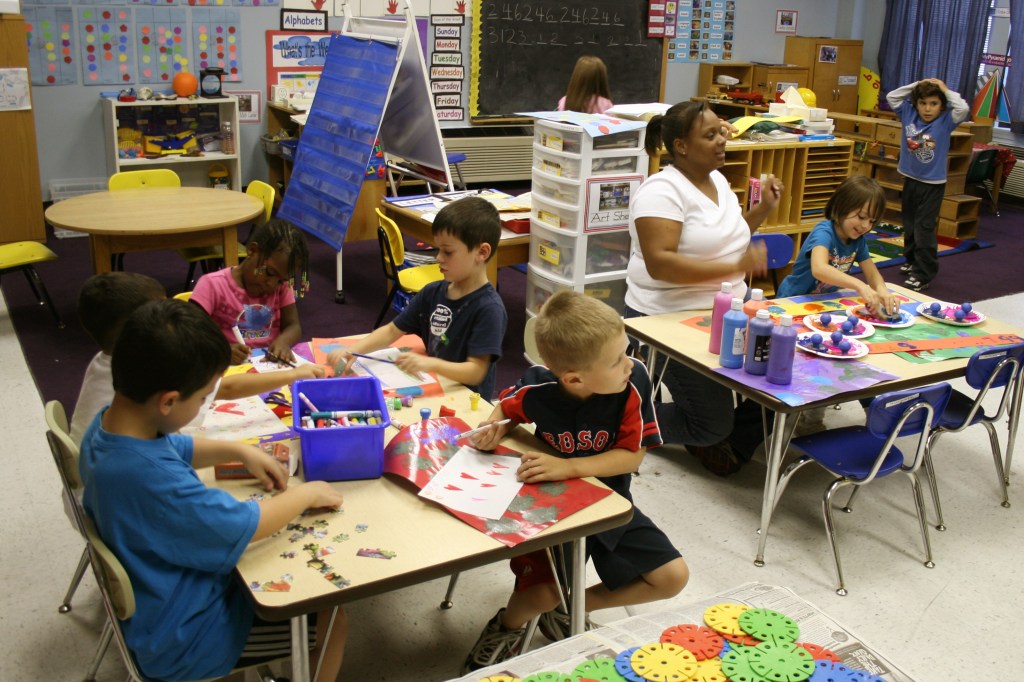
I have been virtually teaching since August so I have had to rely on my parents a lot during lessons and especially during our small group centers that are in half hour segments once a day. Every Friday I do some form of a fine motor activity or an art project so that the students are working on and tuning those fine motor skills with cutting, drawing, painting, etc. Yesterday’s activity was focused on the students showing me their ability to cut. I drew an example of a turkey body and had them cut it out, then showed them how to draw the shape of a feather and cut those out to glue to the body. Eventually we then either drew on faces or they glued googly eyes and other body parts. During my “Group B” I observed a mom and her daughter, G, and how they communicated with each other. Mom was encouraging G as she was cutting, saying phrases like, “ok, slow down, but good job”, and “you can do it” but she also used some more negatively-toned phrases such as “no, G, not like that” and “stay on the line when you cut!” While mom was not trying to be mean with those phrases, and in fact, was attempting to be helpful, I watched G’s face and how she immediately grew frustrated with the fact that she apparently wasn’t doing it “right”. She stopped smiling and laughing as she was cutting, and finished cutting out the body, but not as eagerly as before. When G went to start cutting her feathers out, Mom took her turkey body and said, “oh, I’ll just fix this so it looks nicer”. Once again, mom was not trying to be mean with this, but again, G grew frustrated and alarmed. She even said to her mom, “no, mommy, I did it. Ms. Pyle said it was good” but mom smiled and continued to change what G had completed so that it looked “perfect”.
When this mom changed what G had worked so hard to accomplish (at my cheering and subtle reminders to mom that this WAS G’s project, and I was focused on her process, NOT a “perfect” finished project) it definitely hurt G’s feelings. Mom was unintentionally telling G that what she did was wrong and no good. In G’s eyes, the product that she worked hard to finish wasn’t good enough despite that she had done her best job on it. Changing a child’s own personal work so that it looks “perfect” or like the example/like everyone else’s is not an appropriate action for teachers or even parents to do (not that they all understand that, like this mom)
I’m glad to note that I found myself immediately reassuring G that her work was beautiful and how great her turkey was going to look. I asked her if she was proud of her work and proud of how she was finishing her task, despite it being difficult at times. I did notice that as I subtly reminded mom that this was G’s project and the fact that SHE had done the best that SHE was able to do at her level, mom did not try to change the feathers that G was cutting out, despite her not cutting on the lines exactly or making them nice and even. When I first started teaching I used to love doing projects where we all did the same thing and hung up the same 18 watermelons on the wall…. But no one could tell who’s was who’s because it wasn’t child-directed. My students final products all looked different yesterday, yet we all made a turkey. But the kids were able to take more pride in their own work because they created it how they wanted it. My favorite actually ended up being a blue turkey with green feathers, because that was that child’s favorite colors and that’s how HE wanted his turkey to look like. Observation is essential and useful communication much more. Derman-Sparks & Edwards (2010) state that “children’s daily interactions with their teachers and others adults are at the heart of anti-bias education” and when we listen to what they want, they will being come more interested in what we are teaching or doing. Had I forced that child to use a certain color or create it in an exact way, he might not have enjoyed the project. But I watched his face as mom was pulling out the different colors of construction paper and when she pulled out the brown for the body he frowned and looked upset. When I asked him and allowed him to communicate his wants with the project it showed him that I cared about what he thought and what he wanted to do.
References Derman-Sparks, L., & Olsen Edwards, J. (2010). Anti-bias education for young children and ourselves. Washington, DC: NAEYC.
As I create my family childcare center I would make sure that it is represented as a safe, loving, nurtured environment that supports a diverse world. Families want to know that they are sending their child to a place where they are cared for in many ways so my goal is to create a parent-friendly childcare that reflects their individuality and conveys the message that parents are equally as important to the classroom as the children are. In this type of environment, parents would feel welcomed, valued, and respected. A parent-friendly environment promotes the well-being, learning, and development of parents, their families, and their children. This is important because Derman-Sparks & Edwards (2010) state that “young children need caring adults to help them construct a positive sense of self and a respectful understanding of others” (p.11).
The first area I would address is the entrance to my childcare. I would make sure that this area provides a “warm welcome” check in desk that provides parents with information and access to any of our manuals or policies. We would make sure to have clear signage and any daily notices prominently displayed. Many parents coming to pick their students up after a long day of work are looking to get in and get out relatively quickly, but I still see value in a warm greeting and clear information. Parents also aren’t always interested in a conversation or small talk, but if there’s any key information they need to hear, would be visually displayed as well so they can read the information while the teachers help their students get ready to go home. My childcare would be a welcoming learning environment that reflects the diverse family cultures I serve. It will have to be a pleasant illuminated space and suitable, especially to have an anti-bias place, where there will have a lot of materials, posters, games, and others focused on diversity. Derman-Sparks & Edwards (2010) also states that “all childcare environments, including family childcare homes, should provide excellent anti-bias material with well-defined spaces so that the child feels at home with the same comfort” (p. 52). My program may include children from diverse cultures and could speak different languages. Their ages can vary, and they can be in various stages of their lives. They can live in varied or non-traditional family structures, or some may not live with their parents. No matter the family dynamics, parents play an essential role in their children’s development and learning and I would want that to be prominently understood in my childcare center. Since it would be know that diversity is accepted and celebrated in my childcare, I would make sure that there are prominent displays of diversity, including the flags of the countries my students were from and pictures of their families. We would learn about and celebrate the different holidays or special events of these different cultures and encourage the children and their families to discuss with their peers and come in to teach about those events special to them. In the centers there were be plenty of books, puzzles, posters, dolls, play food, and dress up clothes that would represent the various cultures in our classrooms so that the children can “see themselves” in the things they are playing with.
Another factor in our childcare setting is showing that it’s a safe and structured environment, but the children are given opportunities for exploration and independence. I believe in the value of a schedule and clear behavior parameters, but I want my students to have plenty of time to explore art supplies, have imaginative playtime with their friends, and access to games and materials that allow for creativity. This includes centers and activities both indoor and outside in a natural playground area. It is necessary to listen to the voices of children because as Derman-Sparks & Edwards (2010) also state “personal identity is what most early childhood teachers think about when they are planning ways to nurture children’s positive self-concepts-and the early childhood field knows a great deal about how to do this essential part of our work” (.p.12).” I will create predictable routines, transition strategies, and developmentally appropriate behavior expectations as well as create a “cozy corner” in my classroom or family child care home where children can go if they feel overwhelmed. Nutrition would also play a vital role since a malnourished child is a child who cannot quickly develop his or her abilities so making sure that children have well-developed snacks and meals would also be important to incorporate into my childcare center.
One last thing that I might add to the childcare are Home Visits. In the school that I work at currently we do Home Visits in the Fall, Winter, and Spring and this is a great opportunity for the teachers to get to know the families on a more personal level. They are able to use their expertise to get to know the family, their history, culture, and beliefs. I would incorporate this into my own child care center and have the teachers and family advocates meet weekly to discussing findings and see if there is anything else we can help them with or communicate better.
References
Derman-Sparks, L., & Olsen Edwards, J. (2010). Anti-bias education for young children and ourselves. Washington, DC: NAEYC.


 Brittany's Blog: Teaching with Ms. Pyle