As I create my family childcare center I would make sure that it is represented as a safe, loving, nurtured environment that supports a diverse world. Families want to know that they are sending their child to a place where they are cared for in many ways so my goal is to create a parent-friendly childcare that reflects their individuality and conveys the message that parents are equally as important to the classroom as the children are. In this type of environment, parents would feel welcomed, valued, and respected. A parent-friendly environment promotes the well-being, learning, and development of parents, their families, and their children. This is important because Derman-Sparks & Edwards (2010) state that “young children need caring adults to help them construct a positive sense of self and a respectful understanding of others” (p.11).

The first area I would address is the entrance to my childcare. I would make sure that this area provides a “warm welcome” check in desk that provides parents with information and access to any of our manuals or policies. We would make sure to have clear signage and any daily notices prominently displayed. Many parents coming to pick their students up after a long day of work are looking to get in and get out relatively quickly, but I still see value in a warm greeting and clear information. Parents also aren’t always interested in a conversation or small talk, but if there’s any key information they need to hear, would be visually displayed as well so they can read the information while the teachers help their students get ready to go home. My childcare would be a welcoming learning environment that reflects the diverse family cultures I serve. It will have to be a pleasant illuminated space and suitable, especially to have an anti-bias place, where there will have a lot of materials, posters, games, and others focused on diversity. Derman-Sparks & Edwards (2010) also states that “all childcare environments, including family childcare homes, should provide excellent anti-bias material with well-defined spaces so that the child feels at home with the same comfort” (p. 52). My program may include children from diverse cultures and could speak different languages. Their ages can vary, and they can be in various stages of their lives. They can live in varied or non-traditional family structures, or some may not live with their parents. No matter the family dynamics, parents play an essential role in their children’s development and learning and I would want that to be prominently understood in my childcare center. Since it would be know that diversity is accepted and celebrated in my childcare, I would make sure that there are prominent displays of diversity, including the flags of the countries my students were from and pictures of their families. We would learn about and celebrate the different holidays or special events of these different cultures and encourage the children and their families to discuss with their peers and come in to teach about those events special to them. In the centers there were be plenty of books, puzzles, posters, dolls, play food, and dress up clothes that would represent the various cultures in our classrooms so that the children can “see themselves” in the things they are playing with.

Another factor in our childcare setting is showing that it’s a safe and structured environment, but the children are given opportunities for exploration and independence. I believe in the value of a schedule and clear behavior parameters, but I want my students to have plenty of time to explore art supplies, have imaginative playtime with their friends, and access to games and materials that allow for creativity. This includes centers and activities both indoor and outside in a natural playground area. It is necessary to listen to the voices of children because as Derman-Sparks & Edwards (2010) also state “personal identity is what most early childhood teachers think about when they are planning ways to nurture children’s positive self-concepts-and the early childhood field knows a great deal about how to do this essential part of our work” (.p.12).” I will create predictable routines, transition strategies, and developmentally appropriate behavior expectations as well as create a “cozy corner” in my classroom or family child care home where children can go if they feel overwhelmed. Nutrition would also play a vital role since a malnourished child is a child who cannot quickly develop his or her abilities so making sure that children have well-developed snacks and meals would also be important to incorporate into my childcare center.
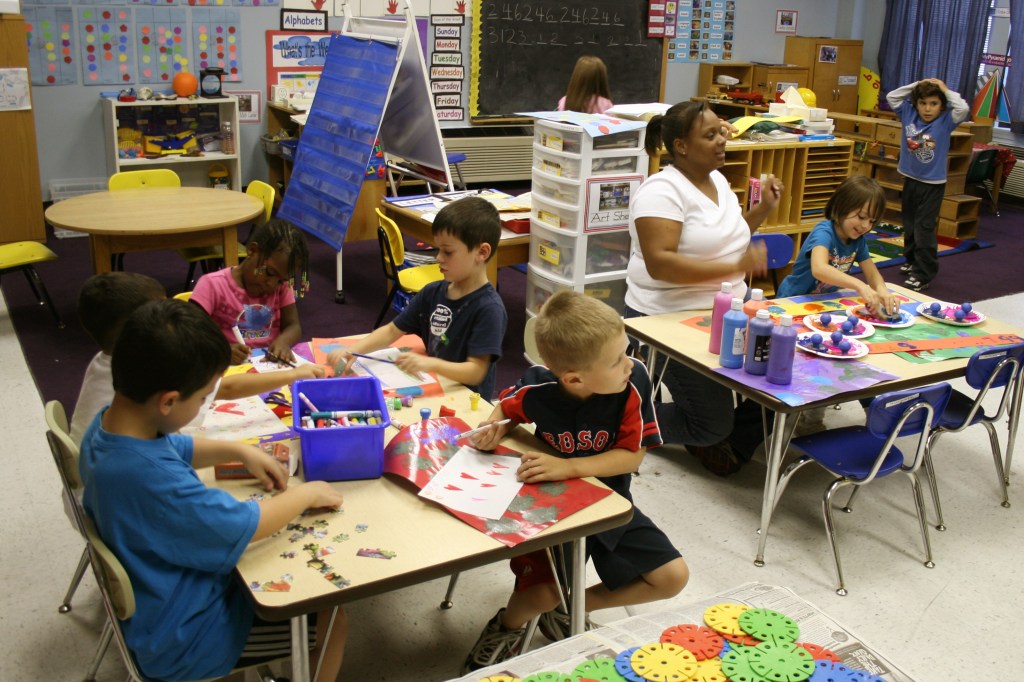
One last thing that I might add to the childcare are Home Visits. In the school that I work at currently we do Home Visits in the Fall, Winter, and Spring and this is a great opportunity for the teachers to get to know the families on a more personal level. They are able to use their expertise to get to know the family, their history, culture, and beliefs. I would incorporate this into my own child care center and have the teachers and family advocates meet weekly to discussing findings and see if there is anything else we can help them with or communicate better.
References
Derman-Sparks, L., & Olsen Edwards, J. (2010). Anti-bias education for young children and ourselves. Washington, DC: NAEYC.

 Brittany's Blog: Teaching with Ms. Pyle
Brittany,
WOW !!! This was such a detailed concept of what it would be like to be a part of you center. I think you covered many questions that a parent would have and some I did not consider. I think that adding the factor of the value of a home visit would be great to see in real time the dynamic of the family from an inside perspective. “To form a caring community where all children can learn and thrive means forging a partnership based on what families wish for their child and what you believe is important for children” (Derman-Sparks, 2010. pg. 39). The details and visuals are also something a parent would like to see when they are seeking a loving, healthy, balanced environment to entrust their children to.
Violanda –
Reference
Derman-Sparks, L., & Edwards, J. O. (2010). Anti-bias Education for Young Children and Ourselves. Washington, DC: National Association for the Education of Young Children (NAEYC).
LikeLike
ok
LikeLike
I really like the family childcare center you created. To me, your mission at your family childcare is to ensure all children and their families are treated with warmth, care, and love. I love how your first priority is to enhance the entrance into your childcare facility. Providing an area where parents can obtain information and access to any manuals or policies as they enter is a great way to get more parents involved in their child’s learning and development. I also love how you speak on reaching those from diverse backgrounds. Creating affirming environments especially for those of diverse backgrounds ensures all children’s well-being is the main purpose of an educational program. As an educator, you have the ability to help young children transition from their parents and still feel comfortable in a home-like environment. You also have the opportunity to create a safe and secure place where all families can be proud to call home and become involved in their children’s development and learning in daily routines.
LikeLike
Hi Brittany,
Your post is so detailed and I enjoyed reading about your family child care center. I really enjoyed how you included pictures in your post. It is essential that children and their families trust you and also feel that the child care center is a safe, clean and nurturing environment where their children will learn and grow which is clearly evident in your center. Great post!
LikeLike